

Uric Acid and Weight: Why Losing Weight Really Does Help Reduce Gout Flares
Being overweight is one of the most underestimated factors in hyperuricaemia. Understanding this link helps you take concrete action —…
Our 3 composite weighted indices cross-reference up to 22 nutritional parameters per food, drawn from 20 scientific databases. A score from 0 to 100 to instantly know what to eat — and what to avoid.
2,281 foods analyzed • 20 scientific databases • 3 exclusive composite indices
You no longer know what to eat. Every meal feels like a gamble. Online information is contradictory, and your doctor doesn't always have time to provide a detailed eating plan.
Unlike standard purine tables, our AUG indices cross-reference up to 22 parameters per food: purines, fructose, oxalates, PRAL, glycemic index, sodium, alcohol, fiber, calcium, and more. Each parameter is weighted according to peer-reviewed scientific publications.
Choose the plan that suits your needs
Save €39.90 — Guide included free!
foods analyzed
scientific sources
scientific databases
parameters per index
composite weighted indices
Uric acid is not just about gout. It sits at the heart of three very common health problems — that make each other worse. Our 3 indices evaluate all three simultaneously for every food, in real time.
Hyperuricemia causes crystals in the joints — painful flares, often in the big toe. Each food gets a Gout Index that factors in purines, fructose and anti-inflammatory effects. A low score means a safe food.
Excess uric acid promotes stone formation. The Stone Index incorporates oxalates, citrates, urinary pH and calorie density. Many foods that are gout-friendly (spinach, tomatoes) still deserve attention for the kidneys.
Excess weight is the leading modifiable risk factor for gout. The Weight Index evaluates satiety, glycemic response and calorie density. Building a filling meal without aggravating uric acid — that's the goal.
Making the right food choices starts with understanding the mechanism. Here's how uric acid forms in your body and why certain foods cause problems.
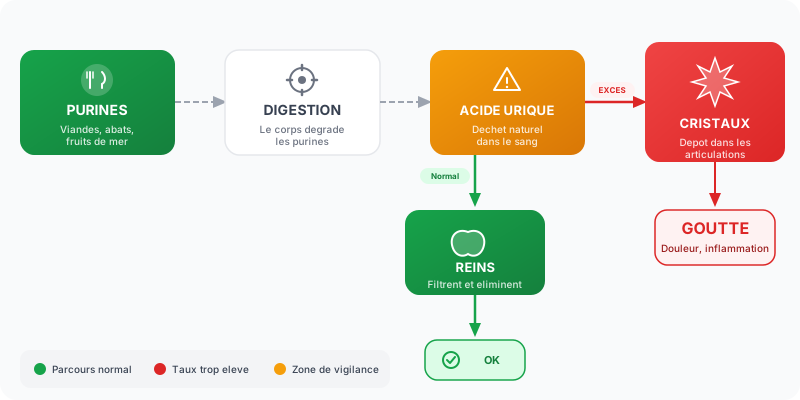
Uric acid is a natural waste product your body creates when it breaks down purines. Purines are found in many foods (meat, organ meats, seafood, some legumes) and also in your own cells. Under normal conditions, your kidneys filter and eliminate uric acid through urine.
When uric acid rises above a certain threshold — called hyperuricemia (above 7 mg/dL in men, 6 mg/dL in women) — it can form tiny needle-shaped crystals that settle in your joints. This is what triggers gout flare-ups: intense pain, swelling, redness, often in the big toe. (source: StatPearls, NCBI)
Roughly one third of uric acid comes directly from food. By identifying high-purine foods and limiting them, you take direct action on your levels. For example, 100 g of anchovies contain 411 mg of purines (very high), while 100 g of rice contains only 15 mg (very low). Our database gives you this data for every food.
Most people with gout only watch their purine intake. Yet the AUG Weight Index integrates glycemic index as a central parameter — here's why it's essential.
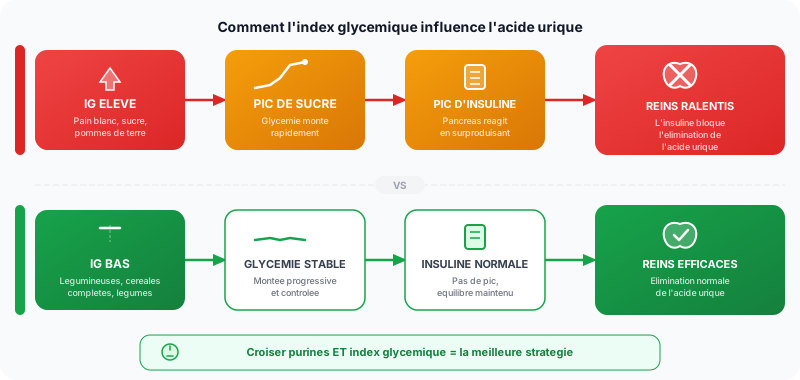
High-GI foods (white bread, potatoes, sweets) cause rapid blood sugar spikes. Your pancreas responds with a burst of insulin. That insulin directly slows the kidneys' ability to clear uric acid. The result: even without eating high-purine foods, a high-GI meal raises your uric acid.
Fructose — abundant in sodas, industrial juices and ultra-processed foods — poses a double threat. Not only does it have a moderate GI, but the liver converts it directly into purines during metabolism. A single can of soda per day can increase the risk of a gout flare-up by 45% in men and 74% in women.
The AUG Weight Index goes beyond glycemic index. It also incorporates calorie density, satiety and glycemic load into a 13-parameter formula. That's what sets it apart from a standard diet table: a single score from 0 to 100 that tells you, for every food, whether it helps or hinders your weight — and therefore, indirectly, your uric acid.
This is how the database actually analyses these foods. Each entry reveals the 3 AUG indices — gout, kidney stones, weight — calculated from 22 scientific parameters. This is exactly what you get for every one of the 2,281 foods.
7-day meal plans, 8 adapted recipes and colour-coded food charts by category. A practical guide to print and keep in your kitchen.
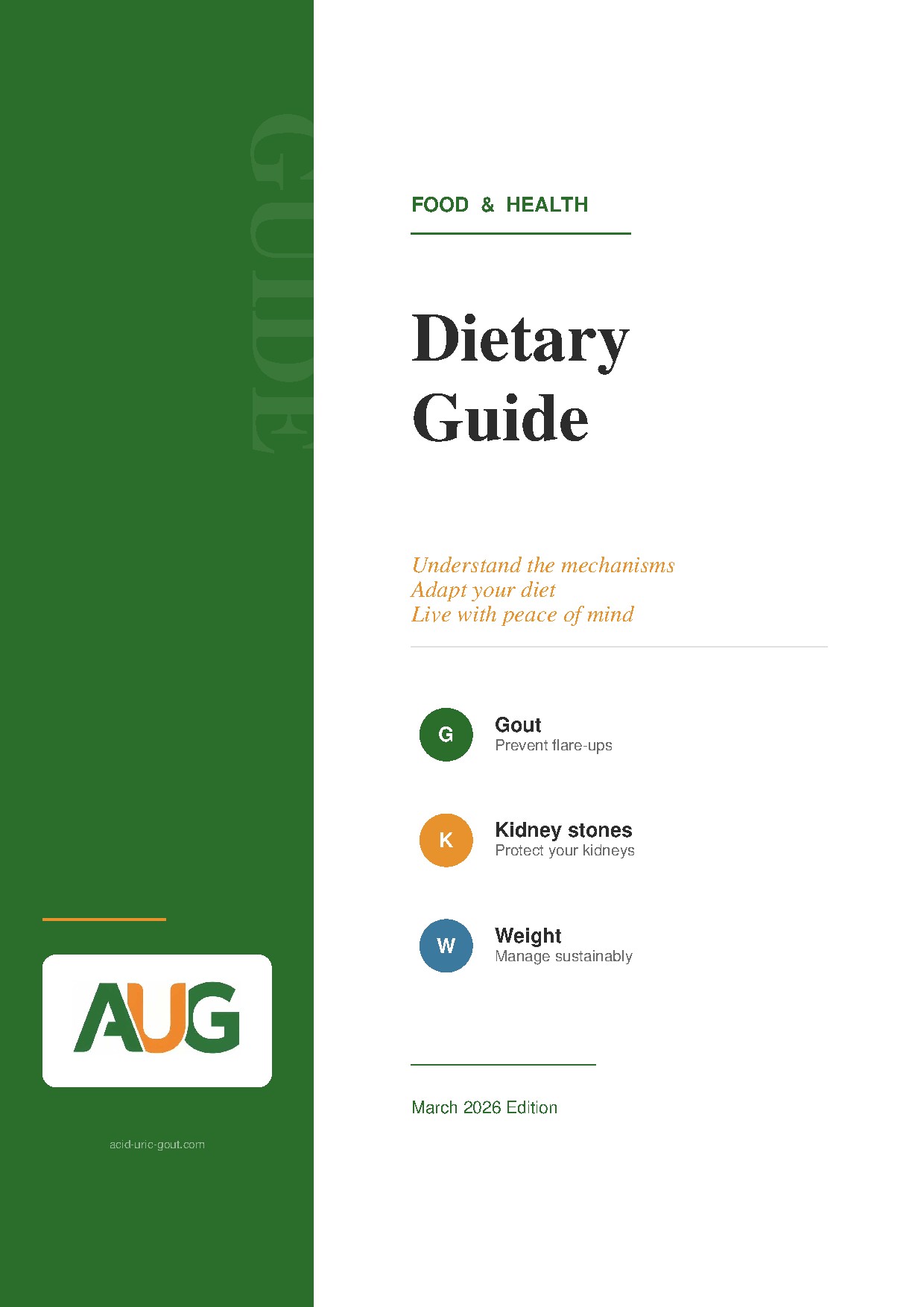
PDF — Instant download
I was struggling with gout for years. This guide gave me a clear plan I could actually follow. My doctor was impressed at my last check-up.
The database saved me hours of research. I just type in a food and instantly know if it's safe. The colour coding is brilliant.
What I love most is how practical everything is. Real recipes, real shopping lists, real results. My uric acid is back to normal.
Being overweight is one of the most underestimated factors in hyperuricaemia. Understanding this link helps you take concrete action —…
High uric acid and kidney stones are often connected. Here are the foods to watch and the dietary habits that…
Key takeaways This article answers the 12 most common questions about gout and diet. Among the key findings: coffee does…
The information on this website is provided for informational purposes only and does not constitute medical advice. It is not a substitute for professional medical consultation. Please consult your doctor or a registered dietitian before making dietary changes, especially if you are on medication.