In brief
Gout and its relationship with diet raise many practical questions. This article compiles answers to the most frequently asked questions: which foods to avoid, which to favor, how to manage a flare, and what role diet plays versus medication. A reference guide designed to quickly and clearly answer your everyday questions.
Have questions about gout, uric acid, and diet? You’re not alone. Here are answers to the 12 most common questions, based on current nutritional data and medical recommendations.
1. Is gout caused only by diet?
No. Diet plays a role, but it’s just one factor among many. Genetics accounts for roughly 60% of the variation in uric acid levels between individuals. Other factors include obesity, certain medications (especially diuretics), kidney function, and dehydration. Diet contributes about 12% to uric acid variation, but it’s a lever you can directly control.
2. Can you eat dairy with gout?
Yes, and it’s actually beneficial. Low-fat dairy products are generally well tolerated with gout and may even help the body eliminate uric acid more efficiently. Cheese, yogurt, and milk are all low in purines.
3. Is coffee good or bad for uric acid?
Coffee is an ally. Research has shown that coffee consumption, both regular and decaf, is associated with lower uric acid levels and reduced gout risk. The chlorogenic acid in coffee appears to inhibit xanthine oxidase, the enzyme that produces uric acid. 3-4 cups per day appear beneficial.
4. Do I have to stop drinking alcohol completely?
Not necessarily, but you need to be selective. Beer is the worst offender (alcohol + brewer’s yeast purines). Hard liquor also raises uric acid. Wine in moderation (one glass per day) appears to have less impact according to some data, though caution is still advised. During a flare, complete abstinence is recommended.
5. Do cherries really help with gout?
The evidence is encouraging. Cherry anthocyanins have anti-inflammatory properties and regular cherry consumption is associated with a reduced risk of gout flares. Tart cherries (Montmorency variety) are the most studied. About 10-12 cherries per day or a glass of unsweetened tart cherry juice concentrate appears to be a reasonable amount.
6. Which seafood should I avoid?
The highest-purine seafood includes anchovies, sardines, mussels, shrimp, and herring. However, white fish (cod, haddock, tilapia) are moderate in purines and can be eaten 2-3 times per week. Salmon is a good compromise: moderate in purines and rich in anti-inflammatory omega-3s.
7. Are carbs bad for gout?
Quite the opposite. Grains and starches are low in purines and form the foundation of a gout-friendly diet. Choose whole grain versions (whole wheat bread, brown rice, whole wheat pasta) for their lower glycemic index and fiber content. Legumes (lentils, chickpeas, beans) are also recommended despite their moderate plant-based purine content, since plant purines have less impact on uric acid than animal purines.
8. How much water should I drink daily?
It is generally recommended to drink at least 8-10 glasses of water per day for people with elevated uric acid. Adequate hydration helps kidneys flush uric acid more efficiently. Dehydration is a known trigger for gout flares, so staying well hydrated is one of the simplest preventive measures.
9. Do supplements like vitamin C help?
Vitamin C has shown modest but real effects on reducing uric acid levels. For other supplements (turmeric, omega-3, quercetin), evidence is insufficient for formal recommendations. Always consult your doctor before starting supplements. For more information, visit the NHS or Mayo Clinic.
10. What uric acid level is concerning?
The commonly accepted threshold is 6.0 mg/dL for women and 7.0 mg/dL for men. Above these values, crystallization risk increases. The therapeutic target for gout patients is typically to maintain levels below 6.0 mg/dL. However, elevated levels don’t always mean flares, some people have high uric acid without ever developing gout (asymptomatic hyperuricemia).
11. Can gout go away with diet changes alone?
Diet alone usually can’t “cure” gout, but it can significantly reduce the frequency and severity of flares. For people with mild gout and moderately elevated uric acid, dietary changes may be sufficient. For more severe cases, medication is often needed alongside dietary modifications. In all cases, diet remains an essential pillar of management.
12. What’s the difference between purines and uric acid?
Purines are molecules found naturally in many foods and in our own cells. When the body breaks down purines, it produces uric acid as a waste product. Normally, the kidneys eliminate uric acid through urine. When production is too high or elimination is insufficient, uric acid accumulates and can form crystals in the joints, causing gout.
PDF Guide
All the answers + a complete dietary plan
These answers give you the foundation. The PDF guide goes further: a 14-day meal plan, a table of 200 ranked foods, recipes and strategies to adapt your diet to gout for the long term.
- Ready-to-use 14-day meal plan
- 200+ foods ranked by purine level
- 30 adapted recipes with purine content
Want to dig deeper? Check our food index for exact purine and glycemic index values of over 100 foods, or download our PDF guide with 14-day meal plans and adapted recipes.
The information on this website is provided for informational purposes only and does not constitute medical advice. Please consult your doctor before making dietary changes.
Sources & References

Want to go further?
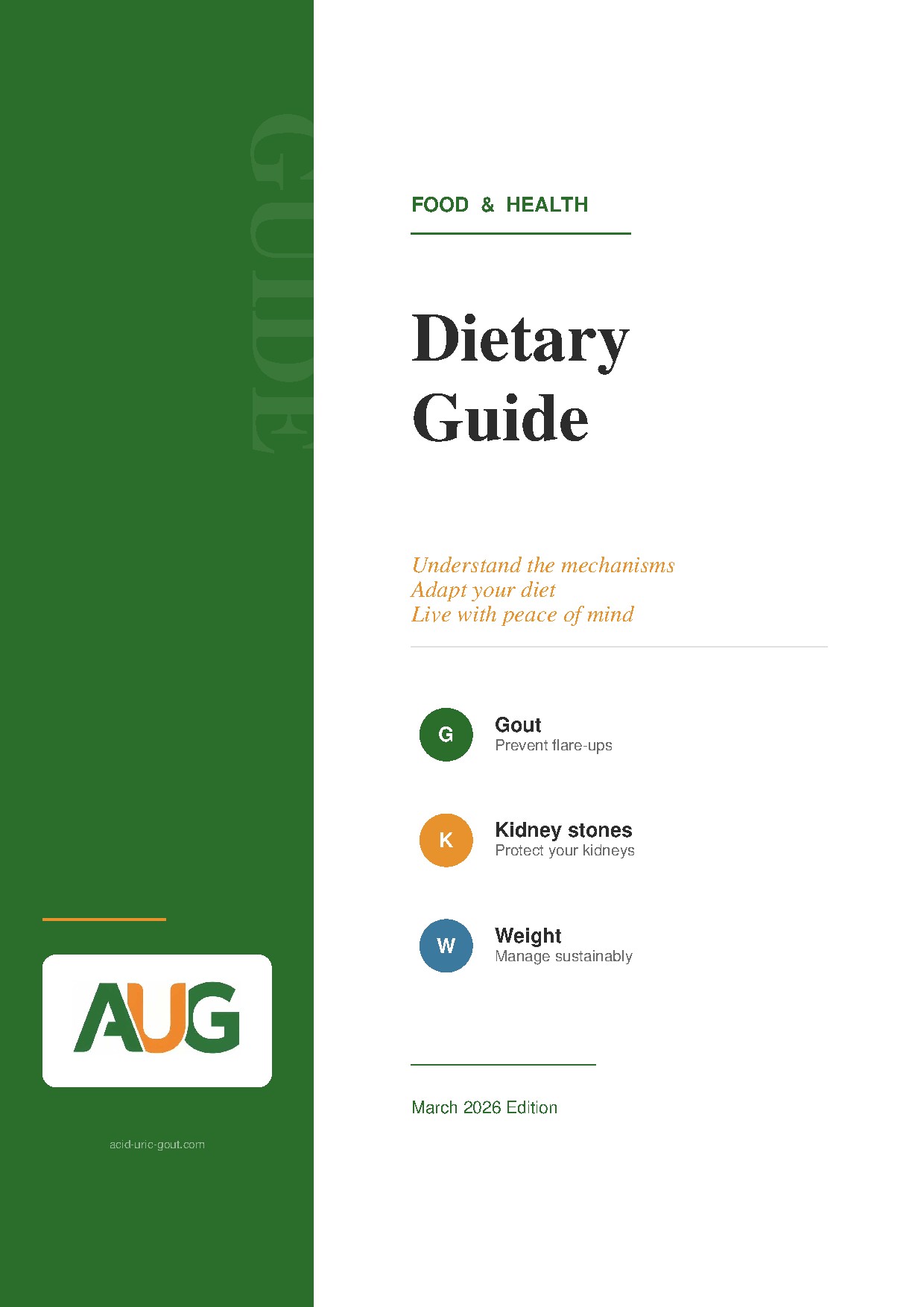
Browse our database of 2,281 foods with the 3 AUG composite indices crossing up to 22 parameters (gout, stones, weight), or download our practical guide with 7-day meal plans.