In brief
Alcohol is one of the most well-documented dietary triggers for gout attacks. Beer is the most problematic (purines + alcohol), but all alcoholic beverages can raise uric acid. Ethanol increases uric acid production and slows its renal excretion. Wine is slightly less risky than beer, but still inadvisable during active gout. The scientific evidence is clear: reducing alcohol is one of the most effective levers.
Alcohol is one of the best-documented risk factors for gout flares. But not all drinks are created equal. Beer is far worse than wine, and some choices are significantly better than others. Here is what the data actually shows.
Why Does Alcohol Raise Uric Acid?
Alcohol affects uric acid through three mechanisms:
- It increases uric acid production: the liver’s breakdown of ethanol generates endogenous purines
- It reduces kidney excretion: alcohol competes with uric acid for renal excretion
- It dehydrates: dehydration concentrates uric acid in the blood
Beer: The Number One Offender
Beer is particularly harmful for gout because it combines alcohol with purines from brewer’s yeast (guanosine). It stacks every risk factor at once:
- 2+ beers daily: 2.5x higher risk of gout
- Beer shows the strongest association with gout of any alcoholic beverage
- Even non-alcoholic beer contains purines (the yeast is still present)
For craft beer lovers: unfortunately, craft beers, IPAs, and stouts tend to contain even more yeast residue than filtered commercial beers, making them potentially worse for uric acid levels.
Wine: A Less Risky Option
Wine, particularly red wine, contains very few purines. Available data shows a much weaker association with gout compared to beer:
- 1-2 glasses daily: only a modest increase in risk
- Red wine contains polyphenols (resveratrol) that may have a slight protective effect
- However, the alcohol itself still affects uric acid metabolism
Drink Comparison Chart
| Drink | Purines | Gout risk | Verdict |
|---|---|---|---|
| Regular beer | High (guanosine) | Very high | Avoid when possible |
| Non-alcoholic beer | Moderate | Moderate | Not as safe as you think |
| Red wine | Very low | Low to moderate | Least risky option |
| White wine | Very low | Low to moderate | Similar to red wine |
| Whiskey, vodka | None | Moderate | Better than beer |
| Sparkling water | None | None | Best choice |
Practical Tips for Social Situations
- Swap beer for a glass of wine whenever possible
- Alternate every alcoholic drink with a full glass of water
- Set a 2-drink maximum per occasion
- Club soda with lime is an excellent alternative at bars and parties
- During football season or BBQs, try switching to hard seltzer (lower purine than beer)
Want to check the full nutritional profile of your favorite foods? Use our interactive food index.
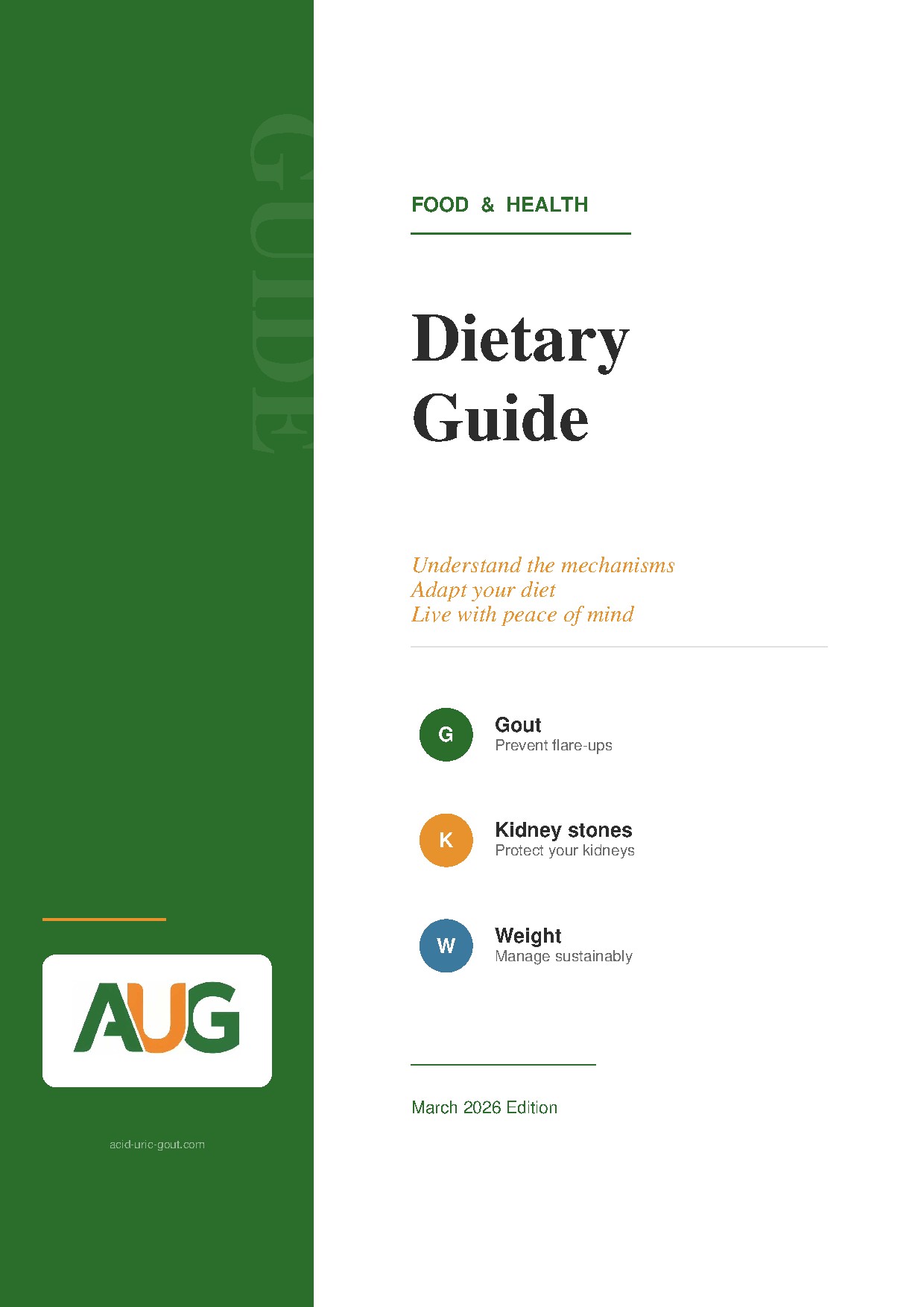
PDF Guide
Complete dietary strategy including alcohol guidance
The PDF guide gives you a full dietary plan that addresses alcohol, with clear rules on what to drink, how often, and how to manage occasional indulgences without triggering a gout attack.
- Alcohol rules built into the plan
- Alternatives to high-risk drinks
- 14-day meal plan with or without alcohol
The information on this website is provided for informational purposes only and does not constitute medical advice. Please consult your doctor before making dietary changes, especially if you are on medication.
Sources & References

Want to go further?
Browse our database of 2,281 foods with the 3 AUG composite indices crossing up to 22 parameters (gout, stones, weight), or download our practical guide with 7-day meal plans.