In brief
Hydration is one of the simplest and most effective levers for reducing uric acid. By drinking enough water, the kidneys filter and excrete urate more easily. The target: at least 2 to 2.5 liters per day, more during physical activity or heat. Not all drinks are equal: water remains the best option, followed by coffee and certain herbal teas. Sodas and industrial juices should be avoided.
When discussing gout management, the conversation usually starts with food. But there’s an equally powerful and often overlooked factor: hydration. Drinking enough water is one of the simplest and most effective ways to help your kidneys flush out uric acid.
How Water Helps Your Kidneys Flush Uric Acid
Uric acid is eliminated primarily through the kidneys via urine. The more hydrated you are, the more efficiently your kidneys filter and the greater your urine volume, which dilutes uric acid and makes excretion easier.
Inadequate hydration is a recognised trigger for gout attacks, particularly in the 24 hours preceding a flare. A good hydration habit helps the kidneys eliminate uric acid more efficiently, drinking at least 2 litres of water per day is a recommendation generally advised by health professionals.
How Much Should You Drink Daily?
For people with elevated uric acid, many rheumatologists recommend aiming for at least 2 litres of water per day.
Practical benchmarks:
- One glass upon waking (before breakfast)
- One glass with each meal
- One glass between each meal
- One glass before bed
- Keep a 1-litre water bottle and aim to refill it at least once
Tap Water, Filtered, Mineral, Does It Matter?
Alkaline and mineral water
Some research suggests that alkaline water may help reduce uric acid levels by making urine less acidic. However, the evidence is not strong enough to recommend expensive alkaline water over regular tap water. Any water is better than no water.
Tap water
In most countries, tap water is safe and well-regulated. It’s the most affordable option. A basic carbon filter removes chlorine taste effectively.
Sparkling water
Sparkling water (unsweetened) is perfectly fine and counts toward your daily intake. Avoid flavoured sparkling waters with added sweeteners.
Coffee and Tea: Surprising Allies
Coffee: an unexpected friend
Multiple large-scale studies have found that coffee consumption (both regular and decaf) is associated with lower uric acid levels and reduced gout risk. The chlorogenic acid in coffee appears to inhibit xanthine oxidase. 3-4 cups per day appear beneficial.
Green tea
Green tea contains catechins with antioxidant properties. 2-3 cups per day is a good target.
Herbal teas
- Nettle tea: traditionally used to support kidney function
- Dandelion tea: a natural diuretic popular in herbal medicine
- Ginger tea: anti-inflammatory properties
- Hibiscus tea: some studies suggest it may lower uric acid
Beverages to Avoid
- Regular soda: the fructose directly increases uric acid production, the #1 beverage to cut
- Fruit juice: even 100% juice concentrates fructose without fibre
- Beer: double trouble, alcohol plus brewer’s yeast purines
- Hard liquor: alcohol blocks uric acid excretion by the kidneys
- Energy drinks: high in sugar and excessive caffeine
- Sweet tea: the added sugar is a problem, switch to unsweetened
Practical Tips to Stay Hydrated
- Keep a water bottle visible on your desk or kitchen counter
- Infuse your water with lemon slices, cucumber, mint, or berries
- Set phone reminders every 2 hours
- Drink a glass before each meal, it also helps with appetite control
- Eat water-rich foods: cucumber (96% water), watermelon, tomatoes, celery
- Switch it up: alternate between still water, sparkling water, herbal tea, and coffee
The Bottom Line
Hydration is a pillar of uric acid management that’s often overlooked. Drinking at least 2 litres of water daily, enjoying coffee and tea for their benefits, and cutting sugary drinks, these simple habits complement your dietary choices powerfully.
PDF Guide
Hydration plan integrated into the complete dietary programme
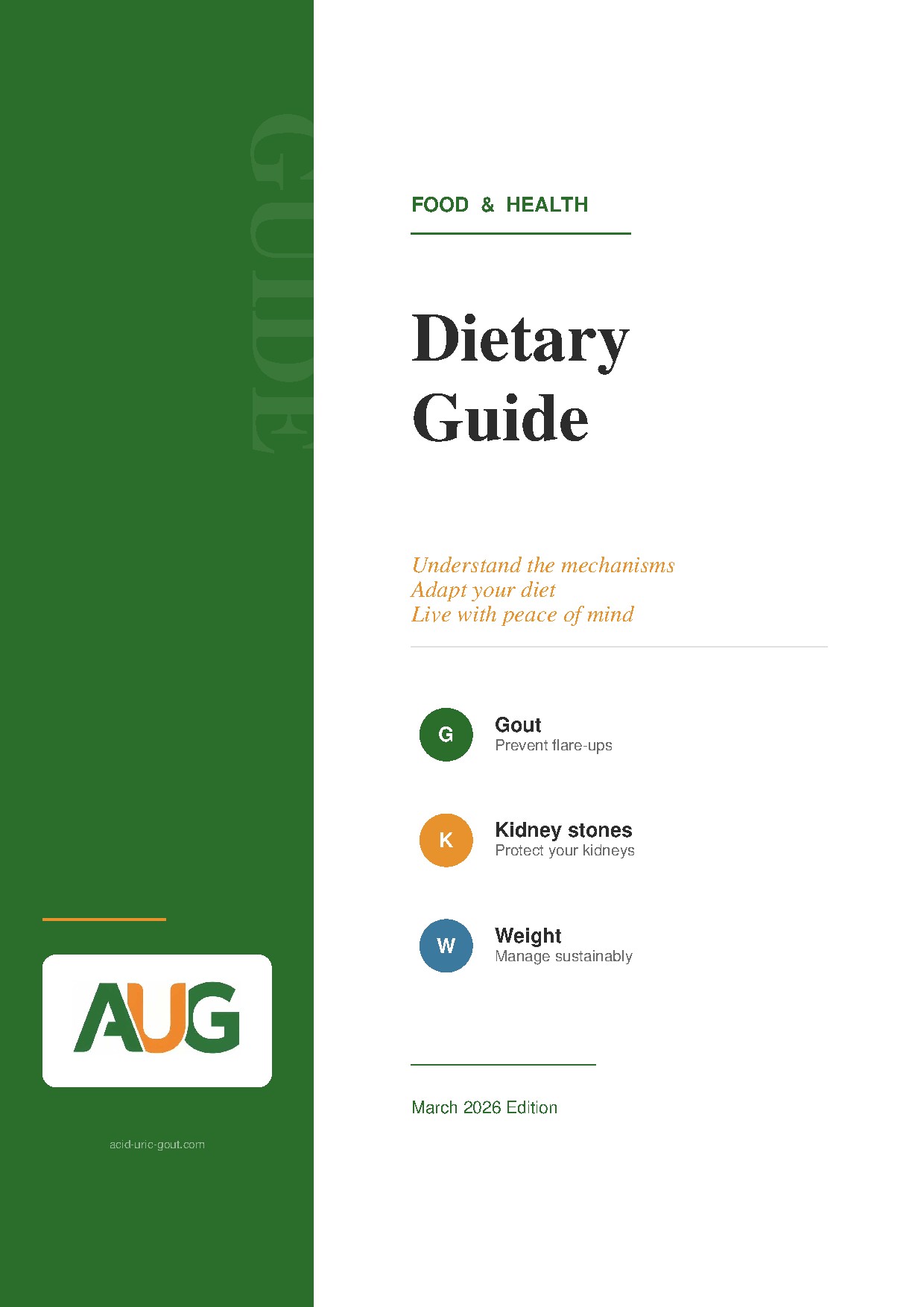
The PDF guide integrates hydration advice into a complete dietary programme: what to drink, when to drink it, and how to combine diet and hydration to optimise uric acid elimination.
- Day-by-day hydration schedule
- Diet and hydration combined
- Recommended waters and drinks
Sources & References

Want to go further?
Browse our database of 2,281 foods with the 3 AUG composite indices crossing up to 22 parameters (gout, stones, weight), or download our practical guide with 7-day meal plans.