Understand
Understand to choose better
Gout, kidney stones, weight: what's really at play on your plate, explained simply, so you can make informed choices without depriving yourself.
Discover ↓Why food matters
Food isn't everything, but it can help you feel better day to day. A few clear guidelines are often enough to take back control of your meals without turning your life upside down. Our goal: to give you reliable, easy-to-apply nutritional information. For your personal situation, talk to your doctor or a registered dietitian.
Three concerns, one same standard
Reducing each topic to a single food or nutrient would be misleading: many factors combine. That's exactly the point of our scores, which weigh up to 22 parameters to reflect a food's real effect.
It's often boiled down to one food to avoid. It's actually more subtle: many factors combine. Our Gout score blends them to give an accurate read, not a shortcut.
Here too, no single factor tells the whole story: it's the overall balance that counts. The Kidney Stone score combines these parameters to keep you off false trails.
Far more than just calories: nutritional quality and satiety matter too. The Weight score blends these dimensions for genuinely filling choices.
How our 3 scores help you choose
To turn all this into simple decisions, every food in our database gets 3 scores (Gout, Kidney Stones, Weight) blending up to 22 parameters weighted from 203 scientific sources. The result reads at a glance.
An intuitive colour code
From most recommended to best avoided: you instantly see where a food stands.
A per-serving calculation
Not just per 100 g: the score adapts to the serving you actually eat.
2,281 foods
A broad, harmonised database, updated as research is published, for easy comparison.
Going further: three key mechanisms
These three examples show how a single food can act through several pathways. They're just three factors among the many each score weighs, but they help explain why an overall reading beats a single criterion.
Uric acid and purines: how it works
Making the right choices starts with understanding the mechanism. Here's how uric acid forms, and why food is one of the levers you can act on.
Where does uric acid come from?
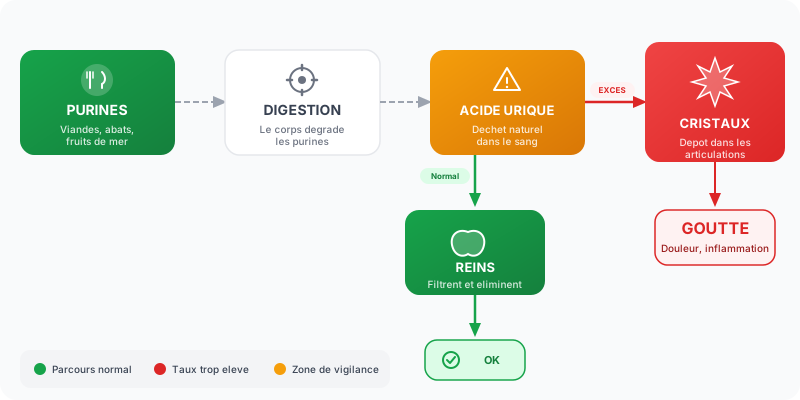
Uric acid is a natural waste product your body creates when it breaks down purines, found in many foods (meat, organ meats, seafood, some legumes) and in your own cells. Under normal conditions, your kidneys filter and eliminate it through urine.
When levels get too high
Above a certain threshold (called hyperuricemia), uric acid can form tiny crystals that settle in your joints. This is what triggers gout flare-ups: intense pain, swelling, redness.
Why food is a lever
Part of your uric acid comes directly from food, so acting on your choices can help you manage your levels. But purines are only one factor among many, which is why our Gout score weighs far more, for an accurate read rather than a shortcut.
Kidney stones: how they form
Just like gout, understanding the mechanism helps you choose. Here's how the most common stones form, and why a few eating habits make a real difference.
Where do stones come from?
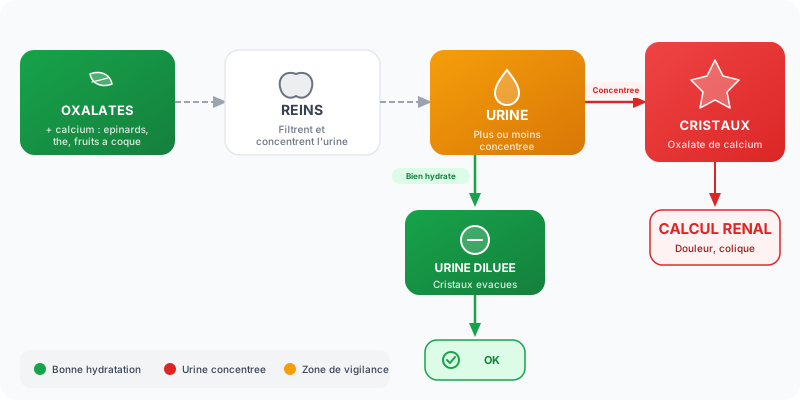
Most kidney stones are calcium-oxalate crystals. Oxalate is found in some foods (spinach, rhubarb, nuts, tea, chocolate) and calcium in everyday food. When urine becomes too concentrated, oxalate and calcium bind and form tiny crystals in the kidneys.
When crystals clump together
If urine stays concentrated and crystals aren't flushed out, they grow and aggregate into a stone. As it travels through the urinary tract, it causes the intense pain known as renal colic.
Why food is a lever
Staying well hydrated dilutes urine and limits crystal formation. Oxalate intake, salt and animal protein also matter. That's why our Kidney Stone score weighs these factors together, rather than banning a single food.
Weight score: why glycemic index matters too
People often focus on a single aspect. Yet how a food affects blood sugar also plays a role, here's why our Weight score factors it in.
The link between blood sugar and uric acid
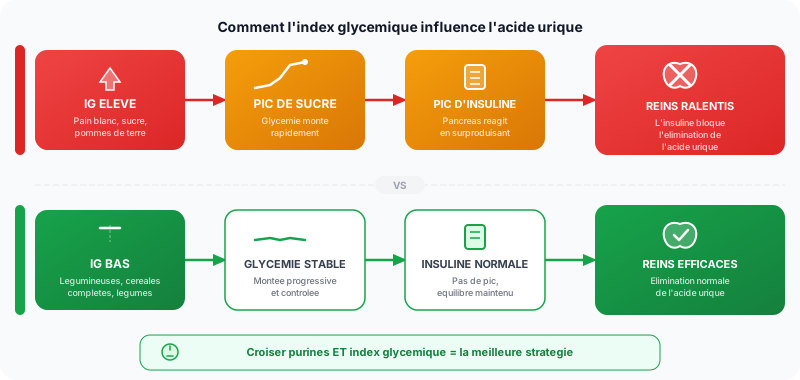
High-GI foods (white bread, potatoes, sweets) cause rapid blood sugar spikes. Your pancreas responds with a burst of insulin, which slows the kidneys' ability to clear uric acid. So even without high-purine foods, a high-GI meal can raise your levels.
The fructose trap
Fructose (abundant in sodas, industrial juices and ultra-processed foods) is doubly tricky: the liver converts part of it into purines during metabolism. A single daily soda is enough to noticeably raise the risk of a flare-up.
A score, not a single criterion
The Weight score goes beyond GI: it also incorporates calorie density, satiety and glycemic load, among up to 22 weighted parameters. That's what makes it an overall reading, not just a grade.
Choosing well, every day
- Compare two foods before deciding, rather than banning them.
- Think in servings: a small amount often changes everything.
- Keep the pleasure: it's about choosing better, not cutting everything out.
See the food index in action
No need to be an expert: type a food, choose your serving, and the 3 indices appear with clear advice. Discover how it works in just a few seconds.
Salmon, baked 100 g- 1 Search for a food
- 2 Choose the serving
- 3 Refine with filters
- 4 Read the scores and advice
Ready to make calmer choices?
Explore the food index and find all 3 scores for each product, calculated for your serving.
Frequently asked questions
Another question? Contact us.
Is food enough on its own?
Food is one lever among others and can help you feel better day to day. It doesn't replace a healthcare professional's advice: for your situation, talk to your doctor or a registered dietitian.
Why 3 scores rather than one number?
Because gout, kidney stones and weight don't depend on the same factors. Three dedicated scores give a more accurate read than a single grade.
Do I have to cut everything out?
No. The goal is to choose better and adjust portions, not to deprive yourself. A food "to limit" is still fine in small amounts or occasionally.