In brief
Purines are natural substances found in many foods. When metabolized, they produce uric acid, which can accumulate and trigger gout attacks. Knowing which foods contain the most purines is essential for managing uric acid levels through diet. Organ meats, certain seafood, red meats, and alcoholic beverages top the list. Reducing these foods is a practical first step, though dietary changes alone may not be sufficient for everyone.
If you are managing uric acid levels or dealing with gout, understanding which foods are highest in purines is a crucial first step. Purines are natural compounds found in many foods. When digested, they break down into uric acid. Here are the 15 highest-purine foods you should be aware of to make informed dietary choices.
What are purines and why should you watch them?
Purines are natural substances found in all living cells. When your body breaks them down, it produces uric acid. Normally, uric acid is filtered by the kidneys and excreted in urine. But when production is too high or elimination is insufficient, uric acid builds up in the blood, a condition called hyperuricemia.
Elevated uric acid can lead to the formation of urate crystals in joints, triggering painful gout flares. Limiting high-purine foods is one of the key dietary strategies recommended to help manage uric acid levels.
The 15 highest-purine foods
This ranking presents purine levels grouped into broad categories, from the most concentrated down to moderate.
| Food | Purine level |
|---|---|
| Anchovies | Extremely high ●●●●● |
| Sardines | Extremely high ●●●●● |
| Sweetbreads | Extremely high ●●●●● |
| Liver | Very high ●●●● |
| Herring | Very high ●●●● |
| Mussels | High ●●● |
| Soybeans | High ●●● |
| Trout | High ●●● |
| Chicken breast | High ●●● |
| Tuna | High ●●● |
| Beef steak | Moderate ●● |
| Turkey | Moderate ●● |
| Lentils | Moderate ●● |
| Shrimp | Moderate ●● |
| Sausage | Moderate ●● |
1. Anchovies, Extremely high ●●●●●
Anchovies are among the highest-purine foods. Whether fresh, canned, or as a pizza topping, they are generally recommended to be strictly limited if you are watching your uric acid levels.
2. Sardines, Extremely high ●●●●●
Valued for their omega-3 content, sardines unfortunately pack a high purine punch. If you enjoy them, stick to small portions on occasion.
3. Sweetbreads, Extremely high ●●●●●
Organ meats in general are very high in purines. Sweetbreads (thymus gland), along with liver and kidneys, are among the foods to limit first.
4. Liver, Very high ●●●●
All types of liver (chicken, duck, beef) are high in purines. Liver pâté and liverwurst are also concerned.
5. Herring, Very high ●●●●
Whether smoked, pickled, or fresh, herring contains significant amounts of purines. A pub classic that calls for moderation.
6. Mussels, High ●●●
Shellfish lovers, take note: mussels are among the higher-purine seafood options. Enjoy them sparingly.
7. Soybeans, High ●●●
Soybeans in all forms (whole, tofu, edamame) are relatively high in purines. Note that tofu, being more processed, generally contains fewer purines than whole soybeans.
8. Trout, High ●●●
A popular freshwater fish, trout is among the higher-purine fish options. Salmon falls in the same category.
9. Chicken breast, High ●●●
This might surprise you: chicken breast, often considered a “lean” health food, contains a notable amount of purines. It remains acceptable in moderate portions, though.
10. Tuna, High ●●●
Both canned and fresh tuna are high in purines. Watch out for tuna salads and sandwiches, a lunchtime staple in many workplaces.
11. Beef steak, Moderate ●●
Red meat, and beef in particular, is a significant source of purines. You don’t need to eliminate it entirely, but moderating portions (3-4 oz per serving) is a good practice.
12. Turkey, Moderate ●●
Like chicken, turkey is a poultry option with moderate to high purine content. Good to know for Thanksgiving planning.
13. Lentils, Moderate ●●
Legumes such as lentils, chickpeas, and dried beans contain purines, but recent data suggests that plant-based purines may have a lesser impact on uric acid levels compared to animal-based purines.
14. Shrimp, Moderate ●●
Shellfish in general (shrimp, lobster, crab) are significant purine sources. Shrimp cocktails at parties? Go easy.
15. Sausage, Moderate ●●
Processed meats, including sausages, hot dogs, and bacon, combine purines with excess sodium and saturated fat, a double reason to limit them.
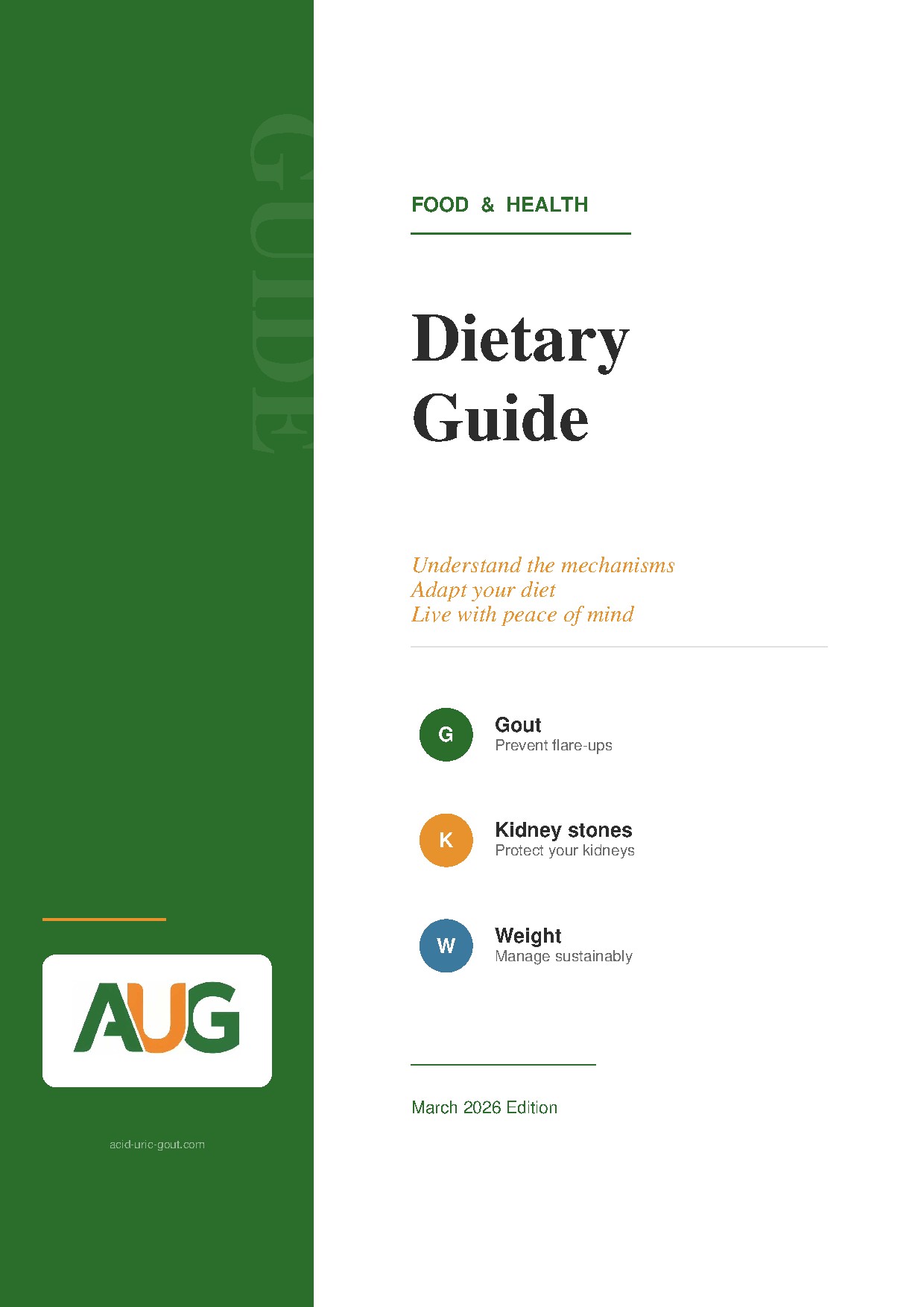
PDF Guide
Exact values, portion tips and alternatives: in the guide
The PDF guide includes a full ranking of 200+ foods with purine levels, substitution tips and recommended quantities for each food to help you manage gout day to day.
- 200+ foods with ranked levels
- Alternatives for each high-purine food
- Recommended portions and frequency
What to eat instead?
Many delicious foods are naturally low in purines. Here are some great alternatives:
- Dairy products: yogurt, cottage cheese, most cheeses
- Eggs: very low in purines
- Most vegetables: cucumber, carrots, zucchini, tomatoes, bell peppers
- Fruits: cherries, apples, bananas, citrus fruits
- Whole grains: brown rice, whole wheat bread, oatmeal (in moderate amounts)
To look up the purine content and glycemic index of over 100 foods, check out our interactive food index. You can filter by category and risk level.
The bottom line
Knowing which foods are high in purines empowers you to make better daily food choices. The goal is not to eliminate these foods entirely, but to be mindful of portions and frequency. For a deeper dive, our practical PDF guide includes 7-day meal plans and gout-friendly recipes.
The information in this article is provided for informational purposes only and does not constitute medical advice. Please consult your doctor or a registered dietitian before making dietary changes.
Sources: NHS, Gout, Mayo Clinic – Gout.
Sources & References

Want to go further?
Browse our database of 2,281 foods with the 3 AUG composite indices crossing up to 22 parameters (gout, stones, weight), or download our practical guide with 7-day meal plans.