In brief
Purines are organic compounds naturally found in our cells and in many foods. When broken down by the body, they produce uric acid. Understanding their origin — both endogenous (produced by the body) and exogenous (from food) — is essential for effective action. Diet accounts for about 30% of uric acid production, making it the most practical area to address.
Purines are at the heart of the uric acid problem, but what exactly are they? Understanding where purines come from and how your body turns them into uric acid is the first step toward taking control of your diet.
What Is a Purine?
Purines are natural chemical compounds found in every living cell. They are part of DNA and RNA, the molecules that carry genetic information. Your body gets purines from two sources:
- Endogenous purines: naturally produced by your body during cell turnover (about 2/3 of total)
- Exogenous purines: from the food you eat (about 1/3 of total)
How Do Purines Become Uric Acid?
When your body breaks down purines, it produces uric acid as the final waste product. This is a normal, ongoing process. Uric acid is then cleared by the kidneys (about 70%) and intestines (about 30%). The problem occurs when:
- Your body produces too much uric acid (excess dietary purines, alcohol, fructose)
- Your kidneys don’t clear enough of it (genetics, dehydration, insulin resistance)
- Or both
A uric acid level above 6.8 mg/dL is considered hyperuricemia.
Not All Purines Are Equal
This is a crucial point that many sources overlook. Current evidence shows that:
- Animal purines (meat, fish, organ meats) significantly increase gout risk
- Plant purines (lentils, spinach, mushrooms) do not appear to increase gout risk in the same way
This important distinction means you do not need to eliminate legumes from your diet.
Foods Highest in Purines
| Food | Purine level | Category |
|---|---|---|
| Anchovies | Very high ●●●● | Very high |
| Calf liver | Very high ●●●● | Very high |
| Sardines | Very high ●●●● | Very high |
| Kidneys | High ●●● | High |
| Mackerel | High ●●● | High |
| Beef | Moderate ●● | Moderate |
| Chicken | Moderate ●● | Moderate |
| Lentils | Low ● | Moderate (plant) |
| Eggs | Very low ○ | Very low |
| Milk | Negligible ○ | None |
PDF Guide
The complete food table is in the guide
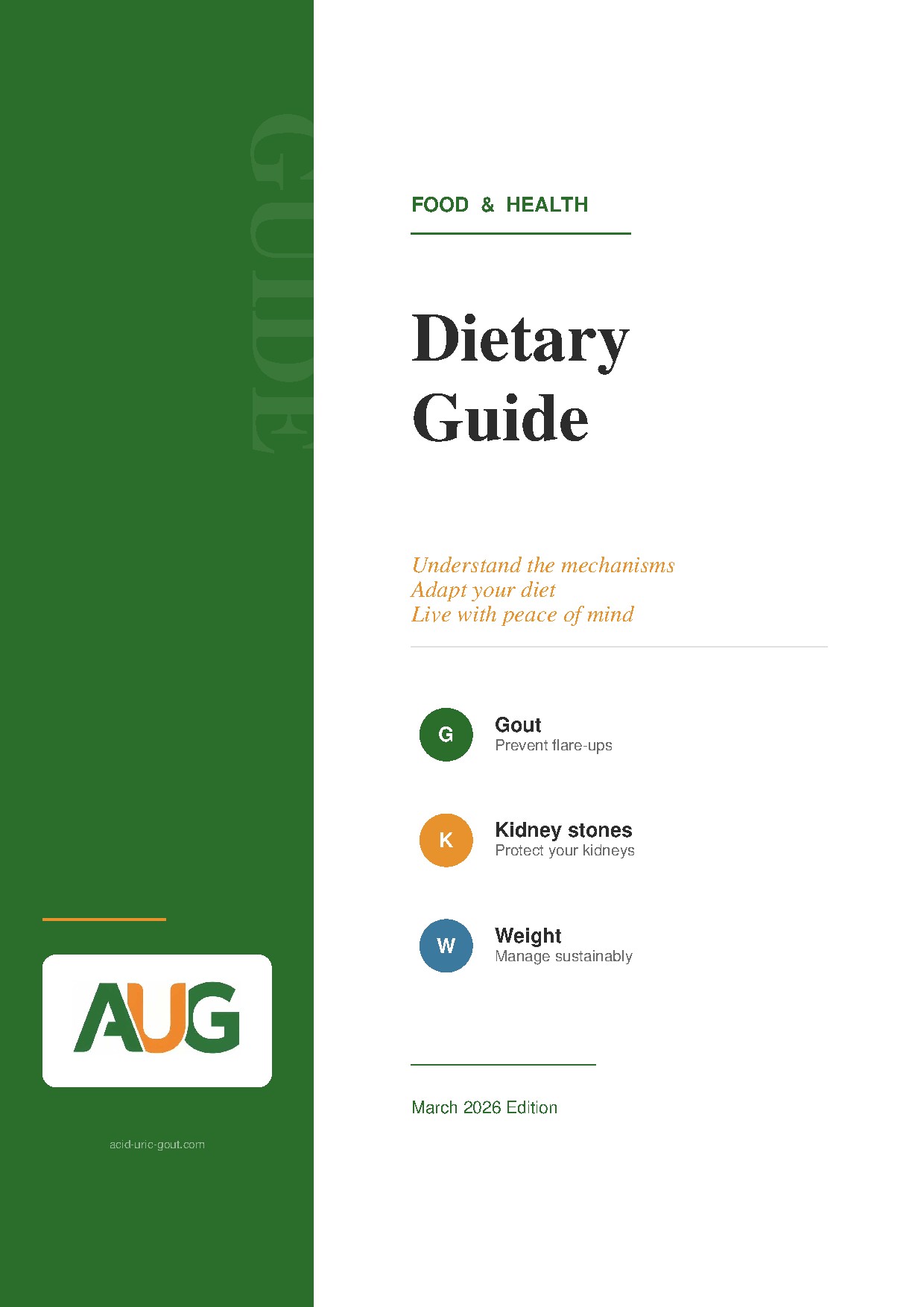
Our PDF guide ranks over 200 foods by purine content, with practical tips for each category to help you make the right choices every day.
- 200+ foods ranked
- Visual colour-coded levels
- Portion guidance
How to Reduce Purines in Your Daily Diet
- Replace organ meats and processed meats with eggs and low-fat dairy
- Choose poultry over beef, and white fish over fatty fish
- Keep legumes in your diet (1-2 times per week is fine)
- Avoid concentrated meat broths (purines dissolve into cooking liquid)
- Limit beer (including non-alcoholic) and high-fructose sodas
- Drink at least 8 glasses of water daily
Our interactive food index lets you check the purine content of each food before planning your meals.
The information on this website is provided for informational purposes only and does not constitute medical advice. Please consult your doctor before making dietary changes.
Sources: Mayo Clinic, Gout Diet, NHS – Gout.
Sources & References

Want to go further?
Browse our database of 2,281 foods with the 3 AUG composite indices crossing up to 22 parameters (gout, stones, weight), or download our practical guide with 7-day meal plans.